Reversing
What must the operator confirm before committing to a reversing path?
A blind spot is a task-specific gap between what an operator needs to see and what the current machine configuration and control environment practically allow them to confirm. It should be assessed by machine, task and target zone.
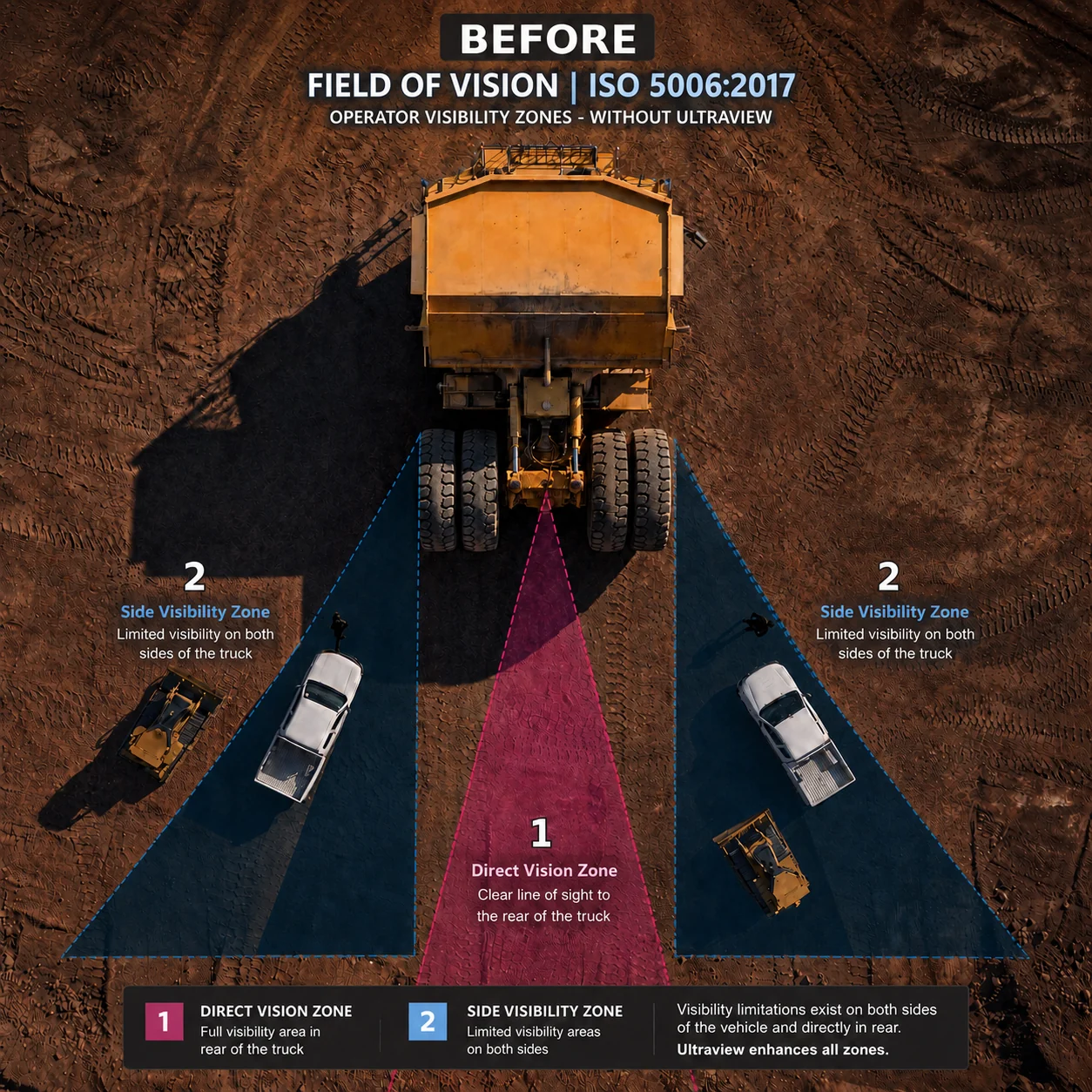
A field-of-vision assessment should distinguish direct sight lines from indirect mirror-supported visibility. It should also record the exact machine configuration, operator reference point, task and conditions.
The goal is not to claim that every zone becomes visible. The goal is to identify what the operator must be able to confirm, what remains masked, and which controls must continue to apply.
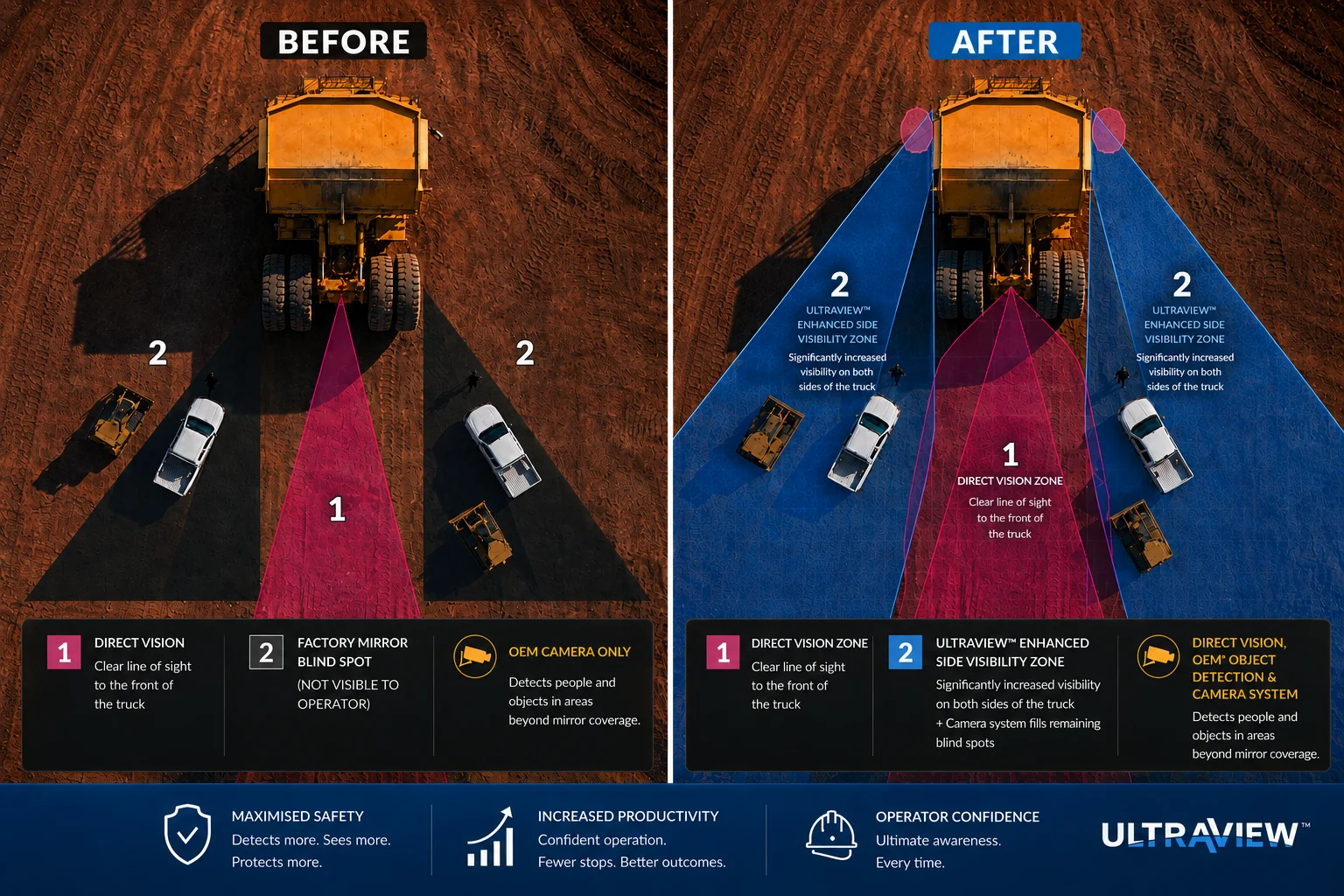
The illustrated arrangement shows how a configuration can change the mirror-supported view. It is not a universal outcome. Final visibility depends on the machine, mounting, body, operator position, settings, task and site conditions.
What must the operator confirm before committing to a reversing path?
Which truck, shovel, tray or ground references need to remain visible through the approach?
Which body, edge, obstacle and ground-reference questions are relevant to the task?
What visual confirmation, communication and separation controls apply in the interaction zone?
Where are the tyre, berm, spill and ground-contact reference points for this machine and task?
How is the view set, checked and maintained when the operator or task changes?
The roadmap below is a way to discuss complementary controls. It does not set a hierarchy of adequacy or remove the need for site-specific risk assessment and operating controls.
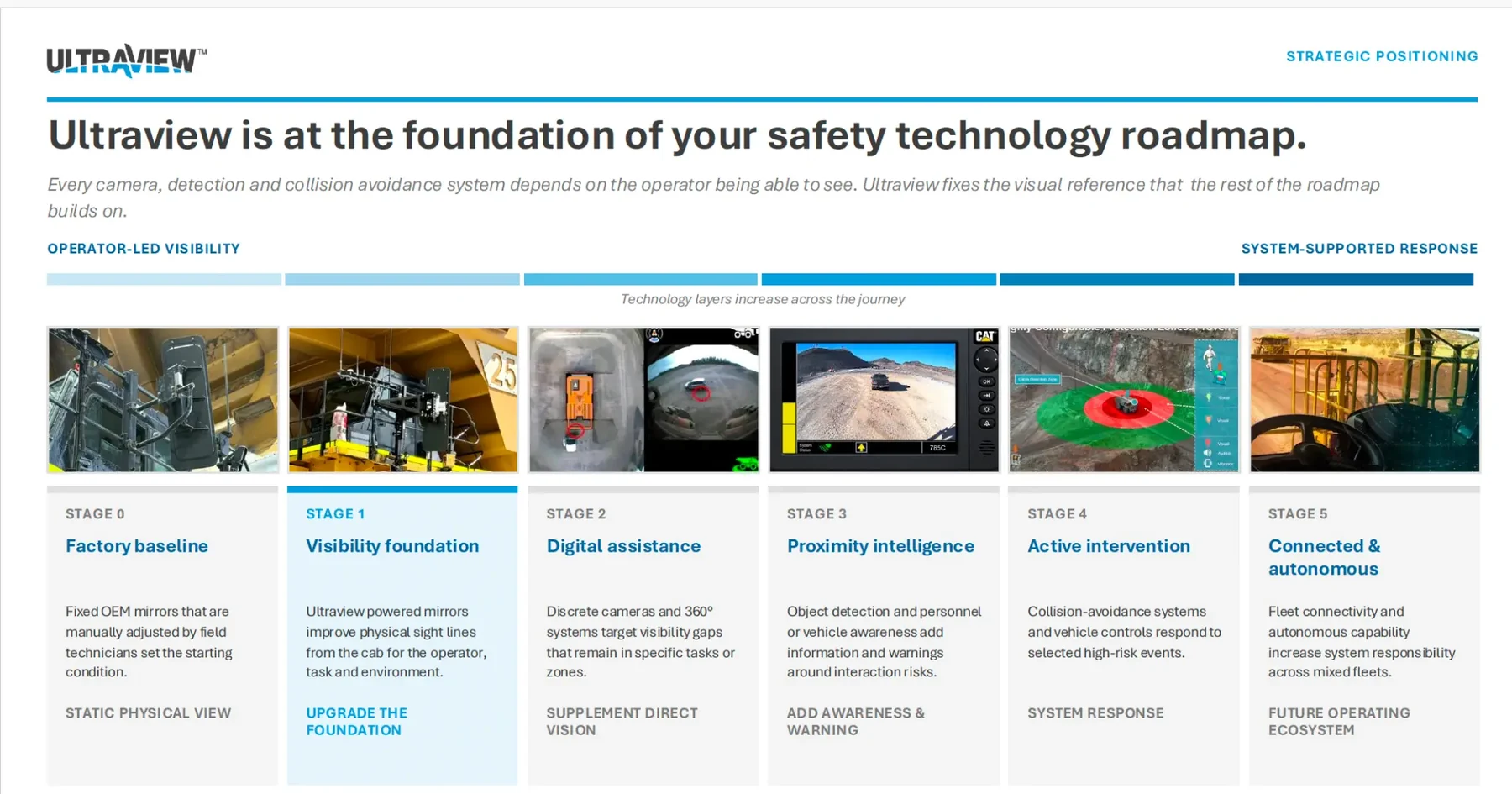
The current machine configuration, mirror set-up and direct sight lines form the starting condition.
UltraView may be assessed as a physical line-of-sight enhancement for the defined task and zone.
UltraView's complementary roleCameras and digital support can address specific visibility questions that remain.
Detection and proximity systems can add information around interaction risks.
Collision-avoidance systems and machine controls can respond to selected high-risk events.
Fleet and autonomous systems can add further layers of operating responsibility.
An alert, camera view or procedure may identify a condition. Where an assessed physical line-of-sight gap remains, an UltraView configuration may provide an additional visual-reference layer to support a positive visual check for the defined task and target zone.
UltraView complements, and does not replace, traffic management, communication, segregation, cameras, object detection, collision avoidance, procedures, training, inspection and maintenance controls.
The right question: what practical visibility gap remains after the current controls are applied?
Identify the exact machine, body, attachments and current configuration.
Define the task, target zone, conditions and operator reference point to assess.
Map current sight lines alongside cameras, detection, procedures and communication controls.
Capture operator and maintenance input about mirror set-up, reliability and task execution.
Review residual zones, MOC requirements and site approval pathways.
Document the configuration, evidence and next decision before any broader rollout.
Use the generic UltraView Operator Visibility Survey to capture practical observations about tyre, ground, offside, reversing, mirror set-up and shift-change visibility. It is designed for a short on-site discussion and a clear follow-up record.
The survey supports discussion only. It does not replace a site risk assessment, operating procedure, engineering review or change-management process.
Bring together the machine, task, target zone, operator input and current control environment in one fleet visibility assessment.
Request a Fleet Visibility Assessment